Membership
Meet a Member
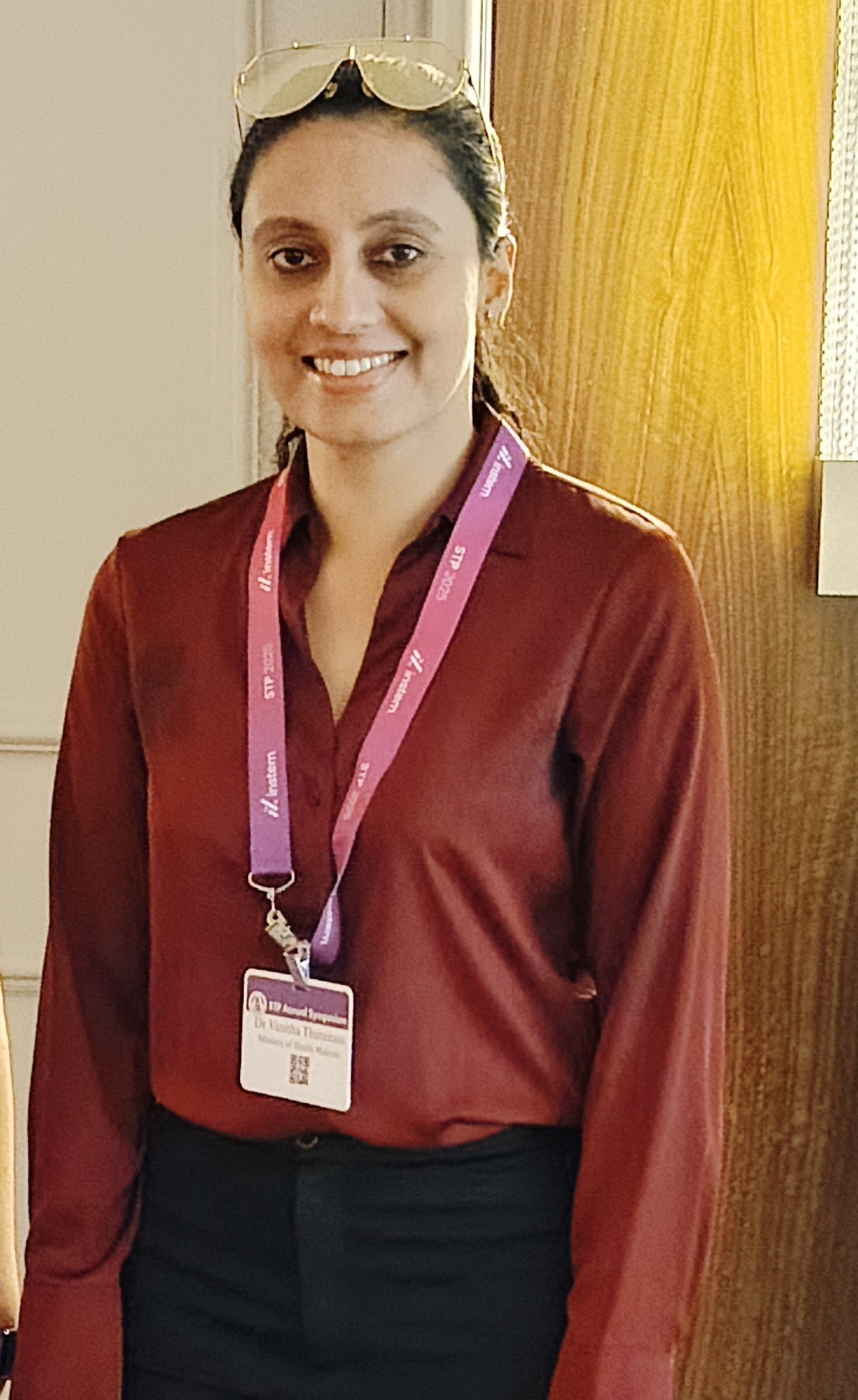
Vanitha Thurairasu
Ministry of Health Malaysia
My name is Vanitha Thurairasu. I am a Public Health Registrar and District Maternal and Child Health (MCH) Officer with the Ministry of Health Malaysia, and a PhD candidate in Environmental Health–Toxicology in the Department of Public Health Medicine at The National University of Malaysia (UKM).
What is your area of expertise and current research focus?
My background is in public health medicine with a focus on environmental and developmental toxicology. My current research examines prenatal exposure to toxic metals and other environmental contaminants in pregnant women and how these exposures may influence fetal growth, neurodevelopment, and adverse birth outcomes. A particular focus of my work is on telomere length shortening in newborns as a potential genomic marker of early-life biological aging and vulnerability to later disease.
What do you consider to be your most influential or significant career achievement or milestone and why is that so?
One of the milestones I value most is the opportunity to design and lead my doctoral project, which brings together clinical practice, epidemiology, and laboratory-based toxicology. This work unfolds around a genomic marker—telomere length—that has rarely been studied in relation to environmental exposures in my region, making it a pilot effort in Malaysia and much of Southeast Asia. Being able to highlight these environmental impacts on health, both within my own setting and across borders regionally, feels particularly meaningful because it generates evidence where very few data currently exist.
Why did you choose birth defects as your major research interest?
As a District MCH Officer, I have personally witnessed how birth defects and related adverse reproductive outcomes can affect not only a child, but the emotional, social, and economic stability of an entire family. Seeing this impact up close made it impossible for me to view birth defects as just statistics. It motivated me to focus on prenatal environments, especially modifiable toxicant exposures, so that we can better understand mechanisms and ultimately prevent some of these outcomes before they occur, as well as bring awareness about these aspects.
What led you to join BDRP, and what will it mean to be involved in BDRP?
I joined BDRP because it is a unique community that integrates toxicology, epidemiology, clinical teratology, and public health with a shared goal of protecting pregnancies and children. As an early-career researcher from a middle-income country, being part of BDRP offers exposure to cutting-edge science, mentorship, and collaboration that I might not otherwise access. Being involved in BDRP means having a scientific “home” where I can both learn and contribute.
What do you hope to give to and receive from the BDRP community?
While in many organizations members naturally focus on what they can receive—training, networking, or resources, I hope to keep the balance of both giving and receiving. From BDRP, I would love to learn more about advanced methods, including computational toxicology, and benefit from mentorship in teratology and developmental toxicology. At the same time, I intend to actively share my work, be engaged in the student and early-career network (if available), and help showcase opportunities and challenges faced by researchers from the global South. I hope this will support other members who seek collaboration or data from underrepresented regions.
In your free time, what are your hobbies, interests, or fun ways to relax?
Absolutely, sleep. While it may often be seen as a sign of laziness, I view sleep as a powerful healing tool. When I feel worn out or low, I love to simply sleep it off and then recharge with a clearer mind. I am also exploring spiritual healing, not so much in a formal religious sense, but through learning about energy, protecting one’s personal “aura,” and practicing gratitude. These small, intentional practices have helped me understand how our inner state can shape the way we experience and respond to the world.